

Wet meadows return in 2026: A boost for Lesser Prespa
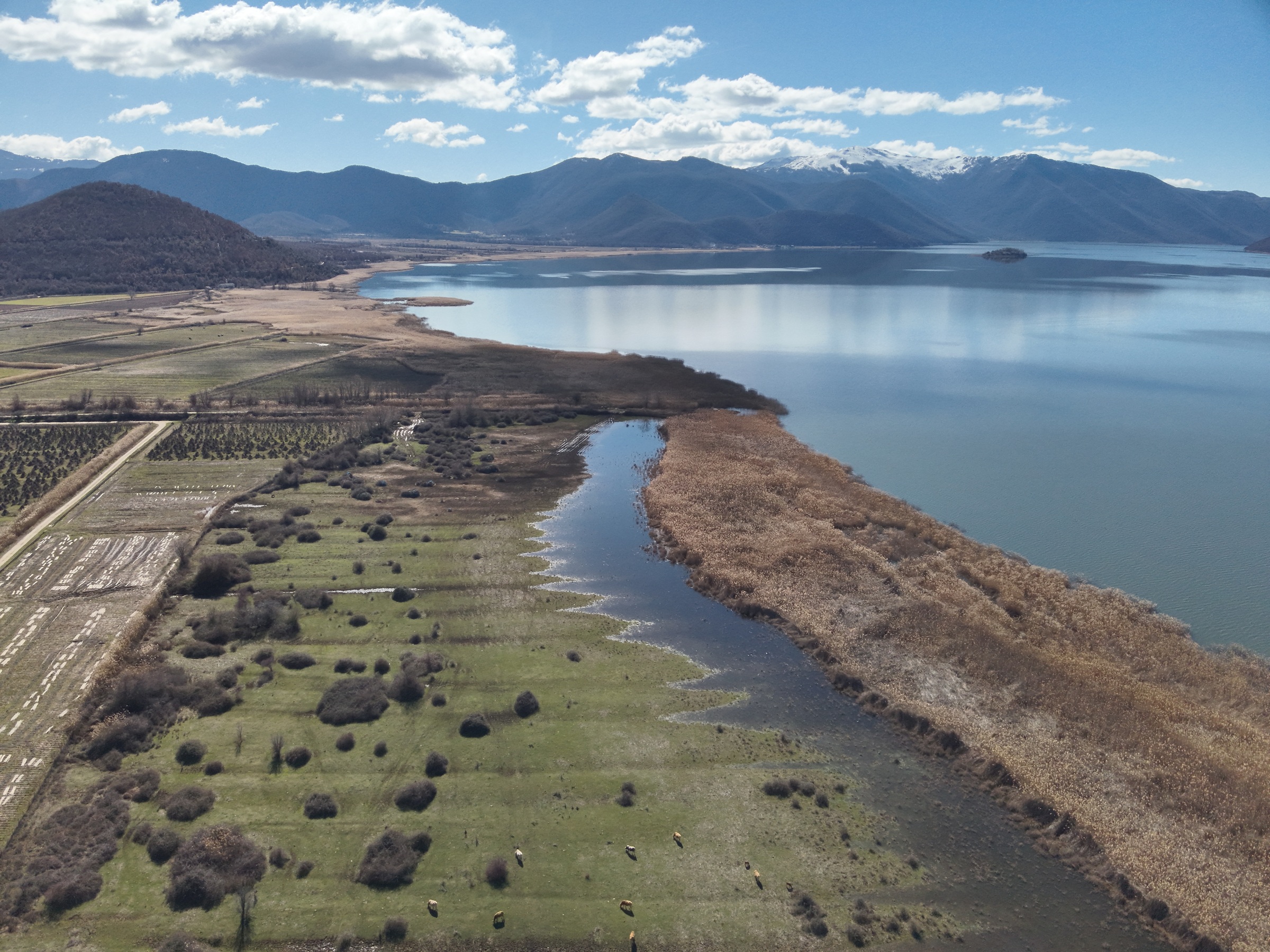
For centuries, with the spring rains and the melting snow, water flowed abundantly into Lesser Prespa, and the surrounding lowlands were flooded for a few months with shallow waters. These temporary flooded areas are known as wet meadows, though they could just as well be called the heart of the lake.
In these sunlit shallow waters — which quickly fill with fresh vegetation and abundant invertebrates, amphibians, and insects — many fish species spawn, especially the valuable Common carp. Nearly all the waterbirds of the area feed there too: ducks, herons, geese, and waders. Unfortunately, without mowing, grazing, or controlled burning — in other words, without management — these areas were quickly overtaken by dense reedbeds, losing much of their ecological value.
For many years, Society for the Protection of Prespa, together with local authorities and agencies at both national and cross-border levels, has worked systematically to restore the functions of this valuable habitat through nature-based solutions. These include smart water-level management in Mikri Prespa whenever possible, and reducing reed expansion through cutting and grazing. This was carried out under the guidance of a multi-stakeholder management body that reviewed, refined, and adjusted actions at the start of each year — as is essential in adaptive management.
Over roughly the last fifteen years, although reed growth had been successfully reduced — mainly through cutting and grazing by large cattle — the lake did not swell in spring, and wet meadows failed to form because of prolonged drought linked to climate change.
This year, however, brought a striking exception. Due to unusually heavy rainfall, the lake’s water level rose dramatically, as it used to in the past. The lake expanded, the waters overflowed the reedbeds, and large areas were once again flooded with shallow water, recreating these precious wet meadows.
And although this year may prove to be an exception that confirms the rule, it remains an encouraging sign that the Prespa ecosystem can recover, once again providing vital habitat for wildlife. Soon, these shallow waters will be filled with spawning fish and feeding birds, and Mikri Prespa will enter the spring of 2026 restored to something of its former glory.
Something we might not even witness today if some people had not worked persistently for years — with vision, care, and a clear plan.